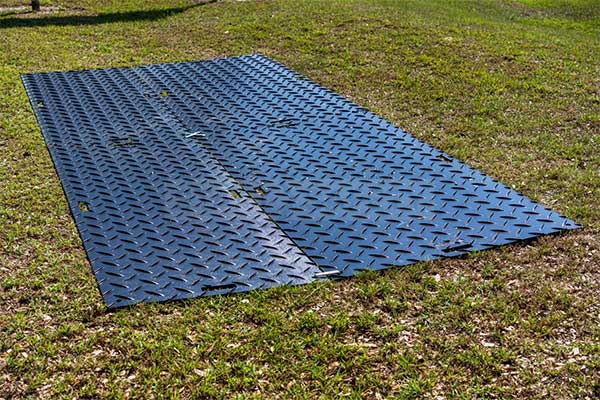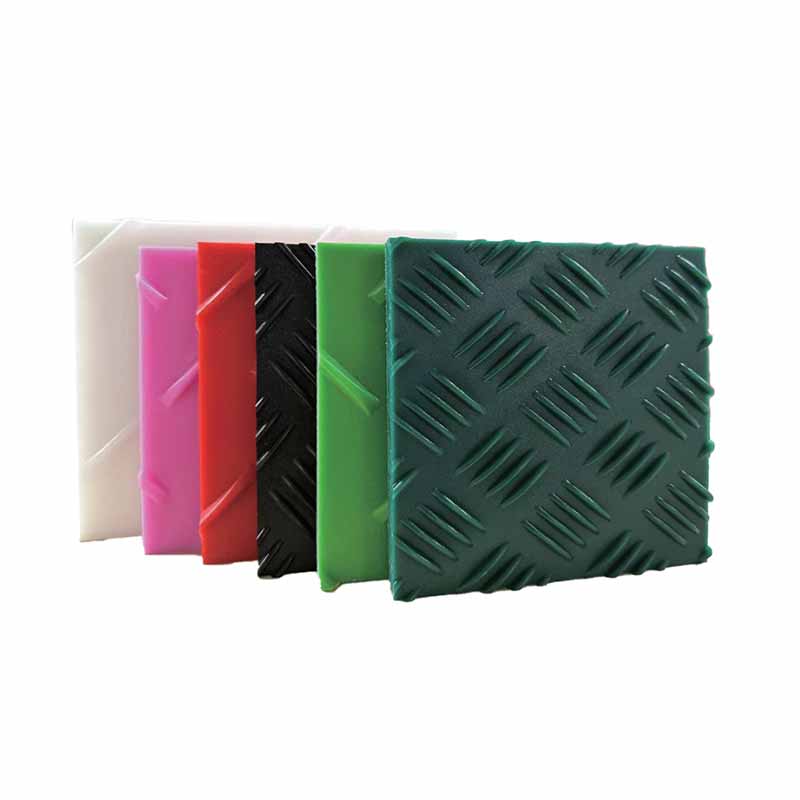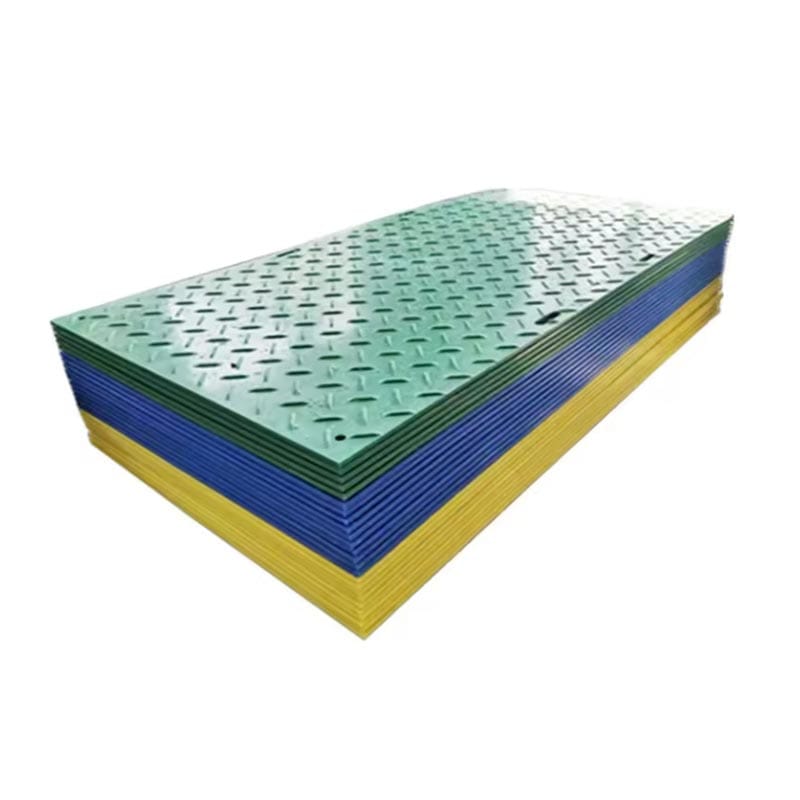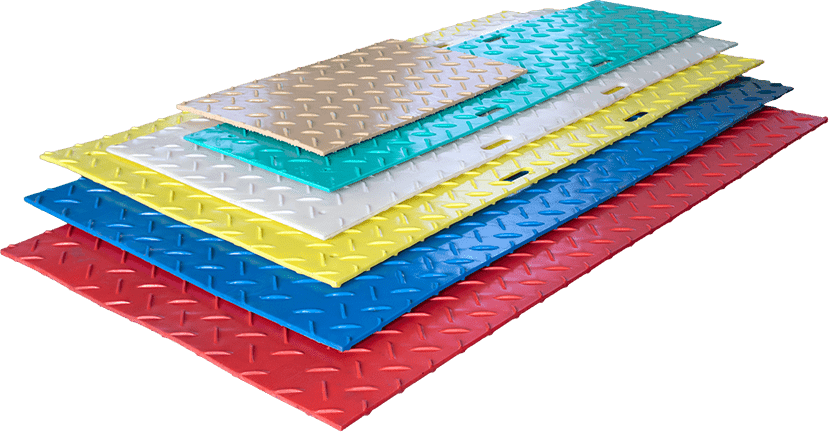


Ground protection mats are a temporary road paving material with the following main uses:
1.Construction site field
Construction vehicle traffic
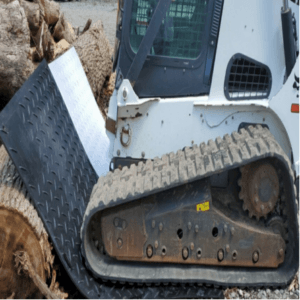
On construction sites, especially during the foundation construction stage, the ground is often soft. Heavy construction vehicles, such as concrete mixers, cranes, dump trucks, etc., are prone to sinking when driving on such soft ground. Ground protection mats can provide a solid surface to disperse the weight of the vehicle and prevent it from sinking. For example, when building the foundation of a large residential area, a large number of concrete transport vehicles are required to frequently enter and exit. After laying the ground protection mats, these vehicles can smoothly transport concrete to various construction sites to ensure that the construction progress is not affected.
Material stacking site
Construction sites need to stack a large amount of construction materials, such as steel, wood, bricks, etc. When stacking materials on some unhardened ground, the materials are prone to moisture or sinking into the soil. Using ground protection mats can create a dry and flat stacking site to protect the quality of construction materials. For example, when stacking wood, ground protection mats can isolate the wood from the wet ground and reduce the possibility of wood rotting.
Temporary channel construction
When channels need to be built between different construction areas of a construction site, ground protection mats are a good choice. It can quickly build connecting channels to facilitate the movement of construction workers and small equipment. For example, ground protection mats channels are laid between the main building and ancillary facilities (such as temporary warehouses and workers’ dormitories) to facilitate workers to carry tools and materials between these areas.
2.Outdoor activities and temporary venues
Outdoor activity venue construction
When holding outdoor activities, such as music festivals, sports events, open-air markets and other occasions, the ground conditions of the venue may be more complicated. Ground protection mats can be used to pave audience channels, vehicle channels, and stage construction areas. For some activities held on grass or soft land, it can protect the ground vegetation from excessive damage. For example, at a grass music festival, ground protection mats are laid to divide the audience walking area and the vehicle driving area. After the event, the ground protection mats are removed and the grass can be restored to its original state quickly.
Temporary parking lot setting
When a large number of vehicles need to be parked temporarily and the ground conditions of the venue are not good, ground protection mats can be used to build temporary parking lots. It can bear the weight of the vehicle and prevent vehicles from damaging the ground in places where the ground needs to be protected (such as parks and around ancient buildings). For example, when large-scale events are held around ancient architectural scenic spots, ground protection mats are used to build temporary parking lots, which can not only meet the parking needs of tourists, but also prevent vehicles from crushing and damaging the stone slabs around the ancient buildings.
3.Emergency rescue and disaster relief scenes
Emergency channel opening
After natural disasters (such as earthquakes, floods, mudslides) or other emergencies (such as fires), normal roads may be damaged or blocked. Rescue teams can use ground protection mats to quickly open temporary channels so that fire trucks, ambulances, rescue engineering vehicles, etc. can reach the disaster area smoothly. For example, in mountain rescue after an earthquake, due to the interruption of the road caused by landslides, rescuers can use ground protection mats to build a channel between the ruins and the mountain to transport rescue equipment and transfer the wounded.
Temporary helipad
In some remote areas or disaster sites, there may be no suitable helipad. Ground protection mats can be spliced into a temporary helipad to meet the requirements of helicopter takeoff and landing. This is very important for the rapid transportation of relief supplies and the wounded. For example, in the rescue of forest fires in mountainous areas, ground protection mats are laid on a relatively flat but unhardened open space as a helipad to facilitate the take-off and landing of fire-fighting helicopters, and to carry out tasks such as aerial firefighting and personnel transportation.