
I. Road Mat Project Background
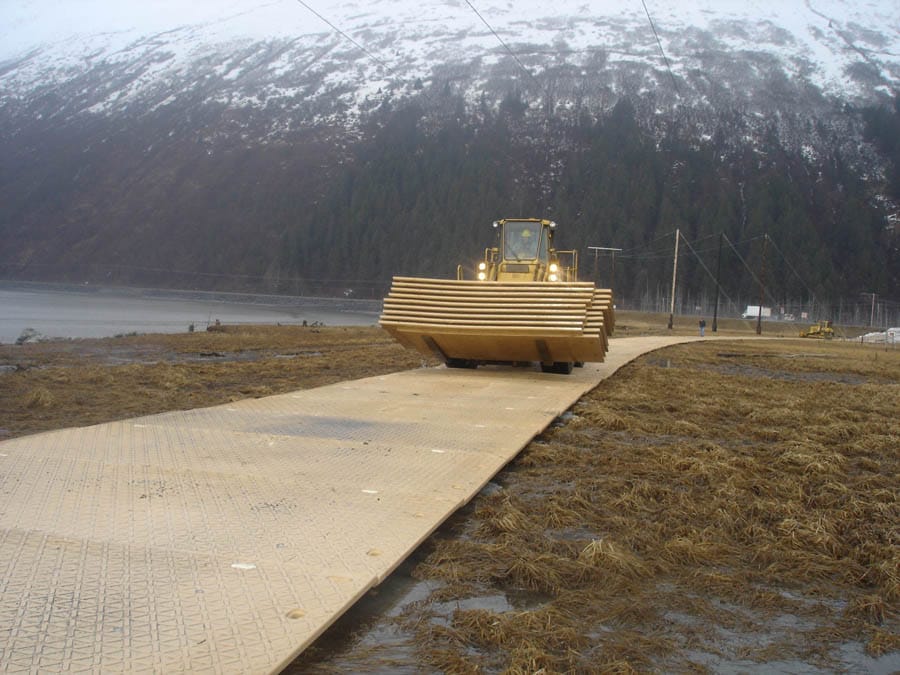
In a large – scale energy exploration project in American, the exploration area covered a vast expanse of swamps. The special geological conditions of swamps, with high soil water content and low bearing capacity, presented huge challenges to the transportation of equipment and the passage of personnel for the project. Traditional construction methods were difficult to establish stable working platforms and access roads on such terrains. If the passage problem could not be effectively solved, the project progress would be severely hindered, and costs would increase significantly. Therefore, it was urgent to find a solution that could be quickly built and adapted to the swamp environment.
II. Selection of Road Plates
1. Material Characteristics
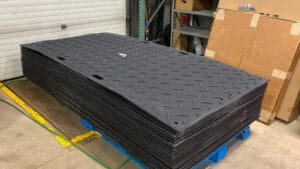
After evaluating various materials, road mats made of high – density polyethylene (HDPE) were finally selected. This material has a low density but high strength and excellent impact resistance, capable of withstanding the heavy pressure of various heavy – duty exploration equipment. Even in the long – term humid and muddy swamp environment, it is not prone to deformation or damage. Its unique molecular structure gives it good corrosion resistance, effectively resisting the erosion of acidic and alkaline substances that may exist in the swamp, ensuring the long – term stable use of the road plates.
2. Design Features
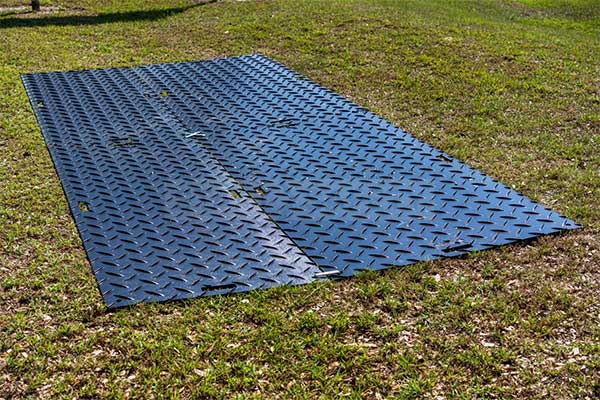
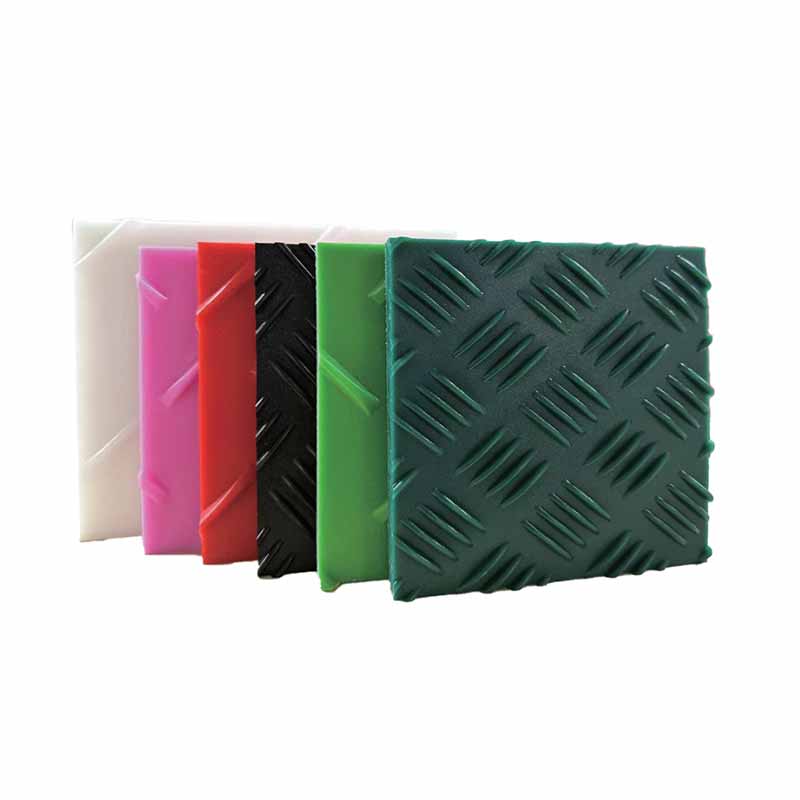
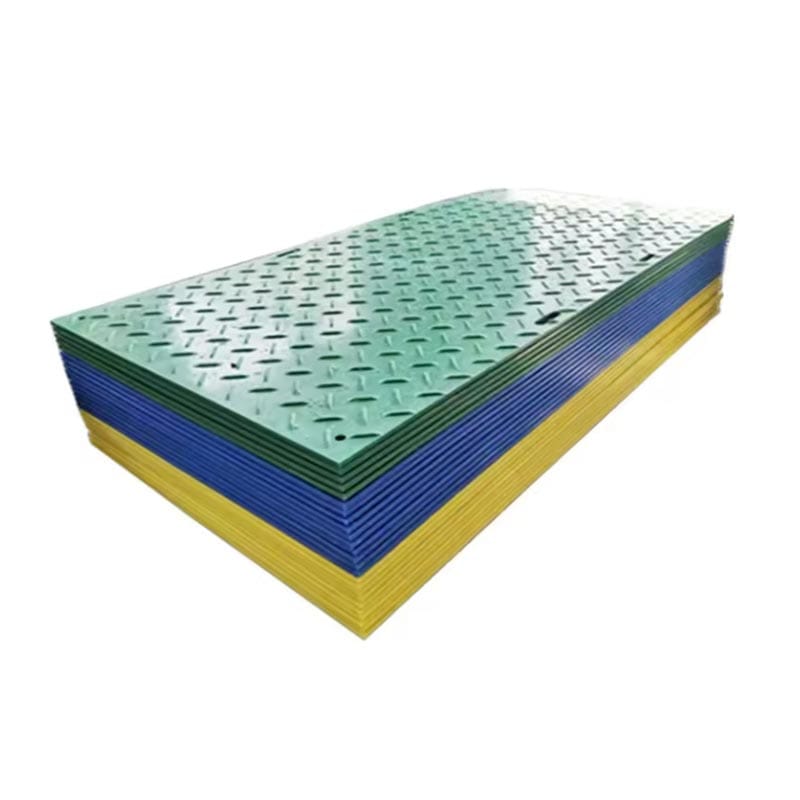
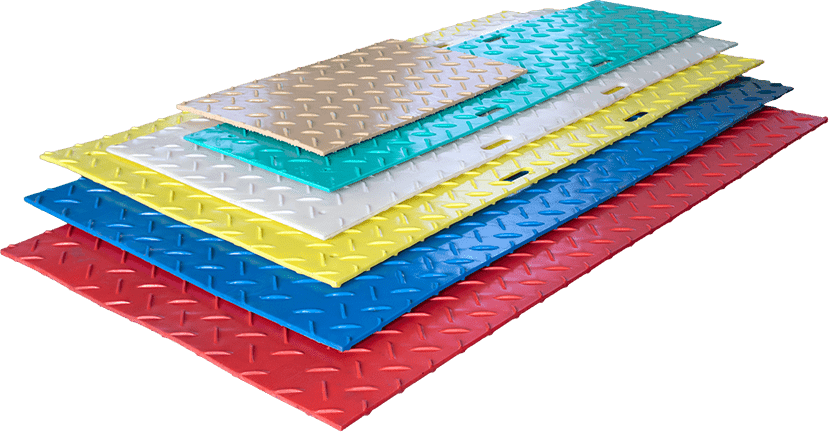
The road mats adopt a modular design. Each plate has a size of 4×8ft(1220*2440mm), with a moderate weight, which is convenient for manual handling and installation. The surface of the plate is designed with anti – slip textures, increasing the friction with vehicle tires and the soles of people’s shoes, ensuring safe walking and driving in wet and slippery environments. The plates are connected through a special locking system. This connection method is simple and fast, enabling multiple road plates to be spliced into the required shape and scale in a short time, forming a stable temporary road or working platform.
III. Laying Process
1. Pre – preparation
Before laying the road plates, a preliminary survey and measurement of the swamp were carried out first, marking the areas and routes that needed to be paved. Since the surface of the swamp is soft, to prevent the road plates from sinking too deep, some particularly low – lying or muddy areas were first simply leveled and padded. Some local sand and gravel materials were used for the bottoming to improve the stability of the foundation.
2. Laying Operation
Construction workers worked in groups, starting from the edge of the swamp and laying towards the interior. First, the first road plate was placed in the predetermined position to ensure the flatness of the plate surface. Then, adjacent road plates were connected in sequence through the locking system. After connecting each plate, the firmness of the connection was checked. In areas with complex terrains, such as those with large slopes or depressions, the construction workers appropriately cut and adjusted the road plates according to the actual situation to ensure the continuity and flatness of the laid surface. The entire laying process progressed smoothly, with an average of [X] square meters being laid per day.
3. Safety Inspection
After laying a section of the area, professional personnel were immediately arranged for a safety inspection. The inspection contents included whether the connections of the road plates were tight, whether there was damage to the plate surface, and whether the overall structure was stable. For some minor problems found, such as loose individual locks, they were promptly repaired and reinforced to ensure that the entire laid area met the safety standards.
IV. Application Effects
1. Passage Assurance
The road mats successfully built temporary roads and multiple working platforms throughout the swamp, enabling heavy – duty exploration equipment such as drilling rigs and excavators to smoothly enter the designated positions for work. Vehicles drove smoothly on the paved roads without sinking or skidding, ensuring the efficient transportation of project materials. At the same time, a safe and reliable walking passage was provided for on – site workers, greatly reducing the risk of workers sinking in the swamp and improving the safety and efficiency of personnel passage.
2. Project Promotion
The use of road mats enabled the exploration project to proceed as planned, avoiding delays caused by passage difficulties. The project progress, which was originally expected to be delayed by [X] months due to swamp passage problems, was finally completed on time, saving a large amount of time, cost, and additional human and material resources for the project.
3. Environmental Friendliness
After the project ended, the removal process of the road plates was simple and convenient, and the damage to the original ecological environment of the swamp was minimal. The removed road plates can be recycled and reused for other similar projects, which is in line with the concept of sustainable development.
V. Summary and Enlightenment
Through the successful case of using road plates in swamps, it can be seen that when facing complex geological conditions, choosing the right paving materials and scientific laying methods is crucial. High – density polyethylene road plates, with their superior performance and reasonable design, effectively solved the passage problem in swamps and provided strong support for the smooth implementation of the project. This case provides valuable experience for future projects such as various construction projects and resource explorations carried out in similar swamp environments. Under the premise of fully considering environmental protection and cost – effectiveness, the rational use of new materials and technologies can effectively address the challenges brought by special terrains.